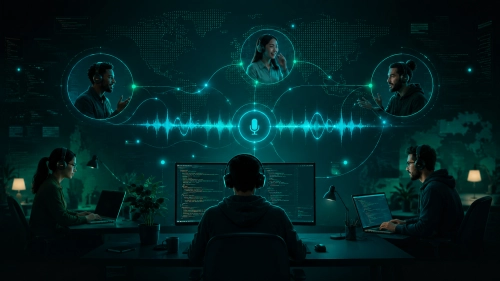
Software engineering and product development rely heavily on swift, clear problem-solving. Yet, traditional communication tools often slow tech teams down. Exchanging lengthy text messages in issue trackers leads to misunderstandings, while scheduling formal video conferences breaks deep coding flow. Voice channels for tech communities have emerged as the premier solution, providing lightweight, on-demand audio spaces where developers, open-source contributors, and tech founders can troubleshoot, review architecture, and collaborate seamlessly.
Table of Contents
Eliminating Context Switching in Technical Workflows
For software developers, entering a state of “flow” is crucial for solving complex logic problems. Constantly stopping to write multi-paragraph text explanations or jumping onto scheduled video calls disrupts this mental state. Always-on voice channels offer a friction-free alternative. When a developer encounters a blocking bug or needs a quick architectural gut check, they can simply hop into a drop-in voice lounge, talk through the logic in two minutes, and return directly to their IDE without breaking momentum.
Elevating Open-Source Communities and Developer Relations
Building a active tech ecosystem requires more than hosting code repositories. Open-source maintainers and developer relations (DevRel) teams use live voice spaces to foster true community engagement. Hosting live audio office hours, technical Q&A roundtables, or hackathon brain-storming rooms allows maintainers to onboard new contributors faster, explain complex pull requests, and build lasting professional trust across global time zones.
Core Best Practices for Tech-Focused Audio Spaces
To build an efficient, highly collaborative voice environment for engineers and tech enthusiasts, implement these structured guidelines:
- Designate Channel Types by Purpose: Create distinct voice channels for specific technical needs (e.g.,
#debugging-lounge,#architecture-talks,#casual-watercooler). - Encourage Short Drop-In Sessions: Normalize quick 3-to-5 minute audio catch-ups to address immediate technical blockers rather than dragging discussions out.
- Combine Audio with Code Sharing: Use live audio alongside shared repository links or code whiteboards for fast, interactive pair-programming sessions.
- Maintain Asynchronous Respect: Use live voice rooms primarily during overlapping working hours, relying on voice clips or clear text summaries for distant time zones.
Accelerate Developer Connection on Datio Meet
Datio Meet provides clean, reliable, and interest-driven audio spaces tailored for modern tech builders, creators, and open-source networks. Free from visual bloat and intrusive tracking, Datio Meet makes it easy to host developer roundtables, run technical workshops, or set up persistent audio lounges for distributed engineering teams. Experience clear, effortless communication that accelerates your technical workflows on Datio Meet.
| Developer Communication Method | Setup & Friction | Logic Clarity | Impact on Coding Flow |
| Issue Tracker Comments | Low (Async) | Low (Prone to misinterpretation) | Minimal |
| Scheduled Video Meetings | High (Requires scheduling) | High | Very High (Context-switching cost) |
| Instant Messaging Chats | Moderate | Moderate (Cluttered threads) | Moderate |
| Drop-In Voice Channels (Datio Meet) | Very Low (Instant hop-in) | High and Precise | Minimal (Fast resolution) |
Related Reading
Voice Chat for Remote Teams: Bridge the Gap in Distributed Workplaces
Interactive Audio Games: The Rise of Screen-Free Voice Entertainment
Live Podcasting in Voice Rooms: The New Era of Interactive Content Creation
Why are voice channels effective for developer communities?
Voice channels allow developers to explain complex logic and debug code in real time without the overhead of scheduling formal meetings or typing long text threads.
How does voice communication help open-source maintainers?
Maintainers can host live audio office hours and onboarding sessions, making it easier to answer contributor questions and explain architecture decisions directly.
Can audio rooms be used for pair programming?
Yes. Developers frequently use camera-free audio rooms alongside screen-sharing or collaborative IDEs to discuss code changes effortlessly in real time.
How do drop-in voice spaces prevent developer burnout?
By eliminating video camera pressure and long scheduled calendar blocks, audio spaces allow engineers to resolve issues quickly and protect their deep focus time.