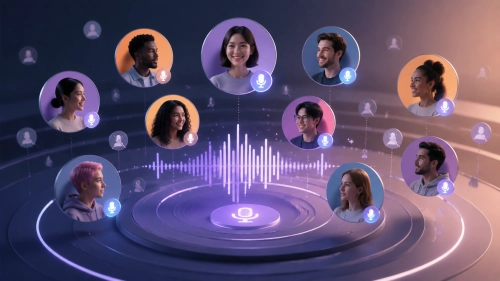
Clubhouse made social audio mainstream, proving that hearing someone’s voice builds an instant connection that text cannot replicate. However, the next massive opportunity in social media isn’t simply copying Clubhouse—it is applying live voice architecture to specific niches like dating, friendship, gaming, and purposeful community building.
Table of Contents
Why People Search for Clubhouse Alternatives
The demand for apps like Clubhouse remains high, but the reasons behind the search have evolved. Today, users look for live voice platforms with distinct goals: some want to engage in real-time chat rooms centered around niche hobbies, others want to meet new people without the pressure of video, and many seek a casual alternative to formal podcasts and webinars. Because search intent is so diverse, a great audio platform must guide users based on their specific goals rather than throwing them into a sea of random, generic rooms.
The Evolution of the Clubhouse Model
The core social audio experience is inherently simple: users drop into live audio rooms, listen to ongoing conversations, raise their virtual hands, and speak when invited by the host. The magic of this format is that it feels significantly more alive and authentic than a text forum, yet demands far less energy and preparation than video. While this drop-in model is highly effective, general-purpose social audio is difficult to sustain long-term unless the platform provides structured topics and consistent moderation.
Finding Success in Niche Social Audio Spaces
The strongest social audio spaces are no longer broad, generalized broadcasting channels. Instead, live voice thrives in targeted environments. Some of the fastest-growing niches include audio dating rooms, real-time language practice groups, founder and business communities, gaming voice squads, creator Q&As, and mental wellness circles. These hyper-focused groups give users a concrete, high-value reason to return to the application daily.
What Early Clubhouse Clones Got Wrong
When social audio exploded, many fast-following platforms copied the room interface but completely ignored the core dynamics of community supply. Without skilled hosts, pre-scheduled events, clear user discovery, and reliable moderation, rooms quickly become inactive. Empty rooms damage user trust instantly. A successful voice-first product must simultaneously solve the experience for both active speakers and passive listeners.
How Datio Meet Redefines Live Voice Connections
Instead of acting as a broad broadcasting network, Datio Meet introduces a highly specialized approach to live voice rooms. The platform is designed specifically for meeting new people, flirting safely, and exploring topic-based social chats. It bridges the gap between public broadcasting and personal connection. Users can safely participate in group discussions and effortlessly transition from a public voice room into a private, secure one-on-one conversation once a mutual interest is established.
The True Value of Social Audio
The long-term opportunity in the tech space is not social audio as a passing hype cycle. The real value lies in social audio with a specific job to do. Matchmaking, forging new friendships, and discoverable local communities provide far clearer utility than a general megaphone. The next generation of winning voice platforms will focus entirely on making human interaction feel less robotic and more authentic.
Exploring the Social Audio Landscape
Choosing the right live voice ecosystem depends heavily on what you want to achieve. Different architectures serve different social needs:
| App Type | Best For | Potential Risk |
| Live Audio Rooms | Large communities, panel discussions, and topic debates | Empty rooms without structured hosts or schedules |
| Voice Dating | Testing personal chemistry and tone before exchanging text | Requires careful safety design and verified profiles |
| Podcast-Like Rooms | Passive listening and learning from industry experts | Lower social conversion and minimal peer interaction |
| Private Voice Chat | Building deeper, continuous one-to-one connections | Requires absolute user consent and strong block controls |
– Safe Random Video Chat Apps: What to Look for Before You Start
– Best Dating Apps for Introverts Who Hate Endless Texting
– Social Audio Apps for Communities: Why Voice Rooms Still Matter
What is the best app like Clubhouse?
The best option depends on the use case: public discussions, friendship, dating, gaming, or creator communities.
Are social audio apps still popular?
The hype is lower than the early Clubhouse boom, but voice rooms still work when tied to strong communities and clear use cases.
Can live audio be used for dating?
Yes. Live audio can reduce awkwardness by letting people meet in group rooms before moving into private conversation.
What should a Clubhouse alternative include?
Good discovery, scheduled rooms, moderation, user profiles, private follow-up options, and clear community rules.